Heavy debris
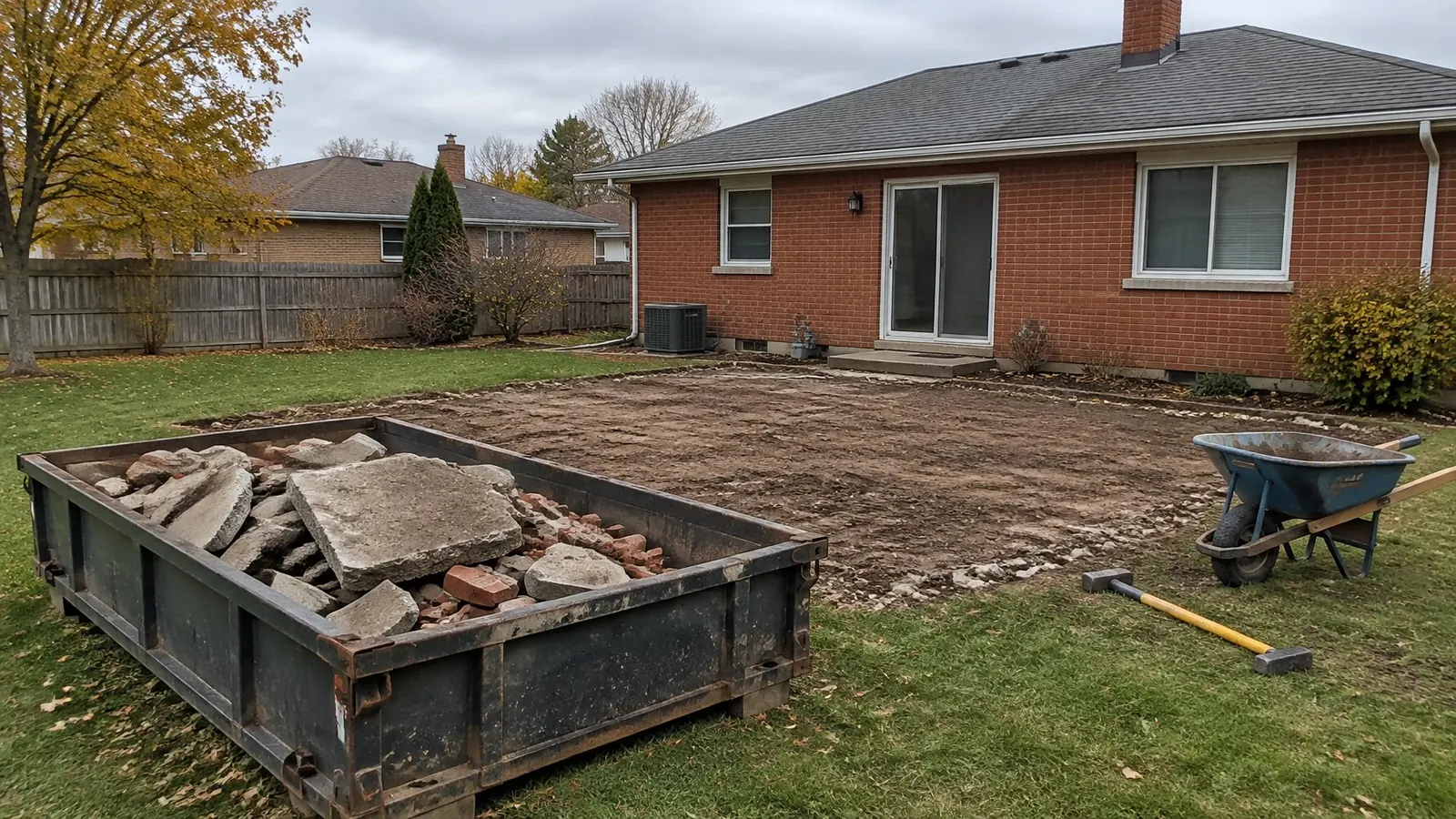
Concrete, dirt and brick: heavy debris needs a small box
A cracked patio, a walkway, a crumbling chimney, a pile of fill dirt. These loads are dense, so the container is chosen by weight, and that means small.
Call hours: Monday to Saturday 8am–8pm, Sunday 8am–1pm (South Bend time)
Why bigger isn't better here
A container full of broken concrete can weigh more than a truck is allowed to carry on the road. That's why companies typically put heavy debris in 10-yard containers, sometimes with low sides, and often ask you to fill only part way.
Expect to be told a fill line. Loading past it can mean the driver can't lift the container, and the job stalls until some of it is taken out by hand.
Common heavy loads
| Material | What to tell the company |
|---|---|
| Concrete patio or walkway | Rough square footage and thickness, and whether there's rebar or wire mesh in it |
| Brick or block | Whether mortar is still attached, and roughly how many square feet of wall |
| Dirt and sod | Whether it's clean soil or mixed with roots, rock or debris |
| Asphalt | Driveway size; some companies treat it as its own load |
Keep the load clean
Clean concrete or clean dirt can often be recycled or reused, and companies may price a clean heavy load differently from mixed debris. One bag of household trash tossed on top can change that, so keep a separate bin for everything else.
Heavy containers are also hard on driveways. Plywood under the rails matters more here than on any other job; the placement guide covers it.
Book a roll-off for your project
Describe what you're getting rid of. An independent local roll-off company will suggest a container, offer delivery dates and give you its price.
Use this number to rent a roll-off or a portable toilet. South Bend garbage, recycling and bulk pickup questions go to 311.
Call hours: Monday to Saturday 8am–8pm, Sunday 8am–1pm (South Bend time)
Your call may be recorded; see the referral disclosure.